
Last updated November 16, 2026
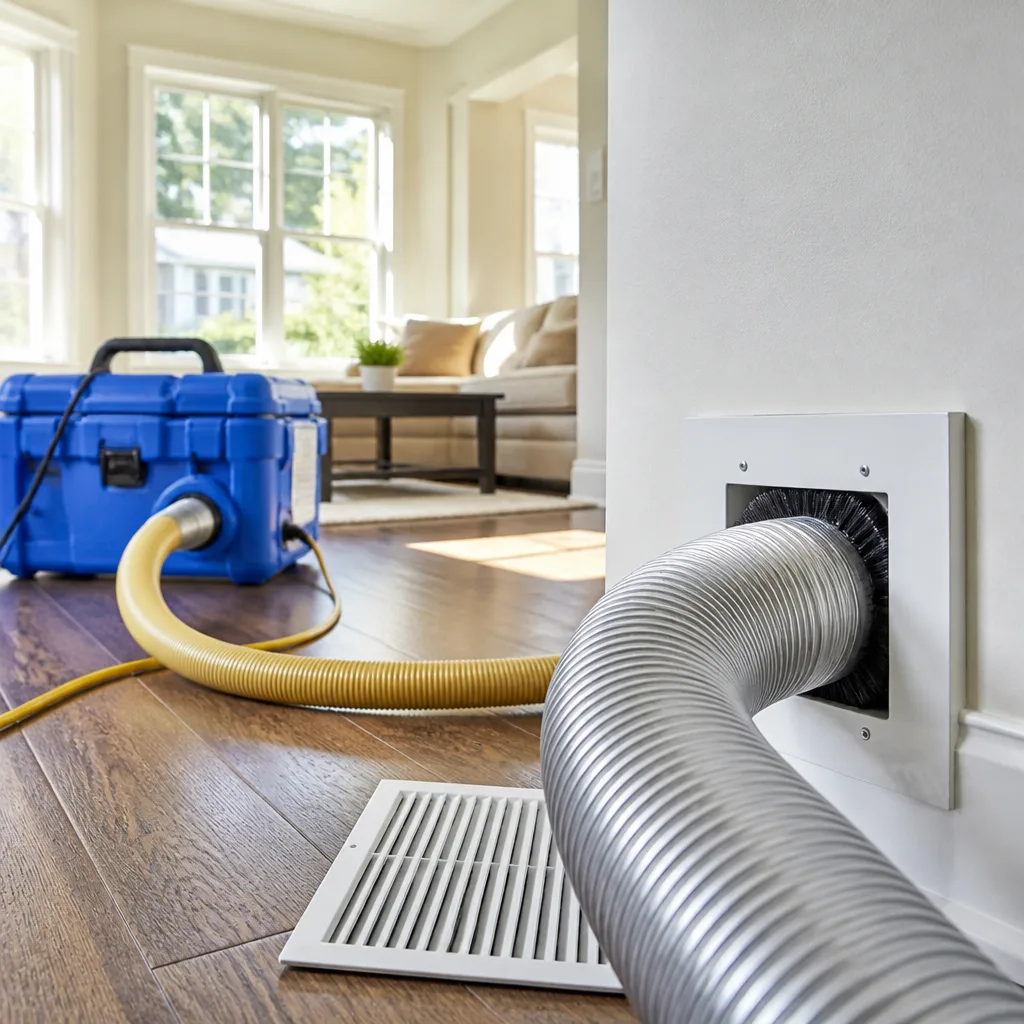 Whole-home duct cleaning
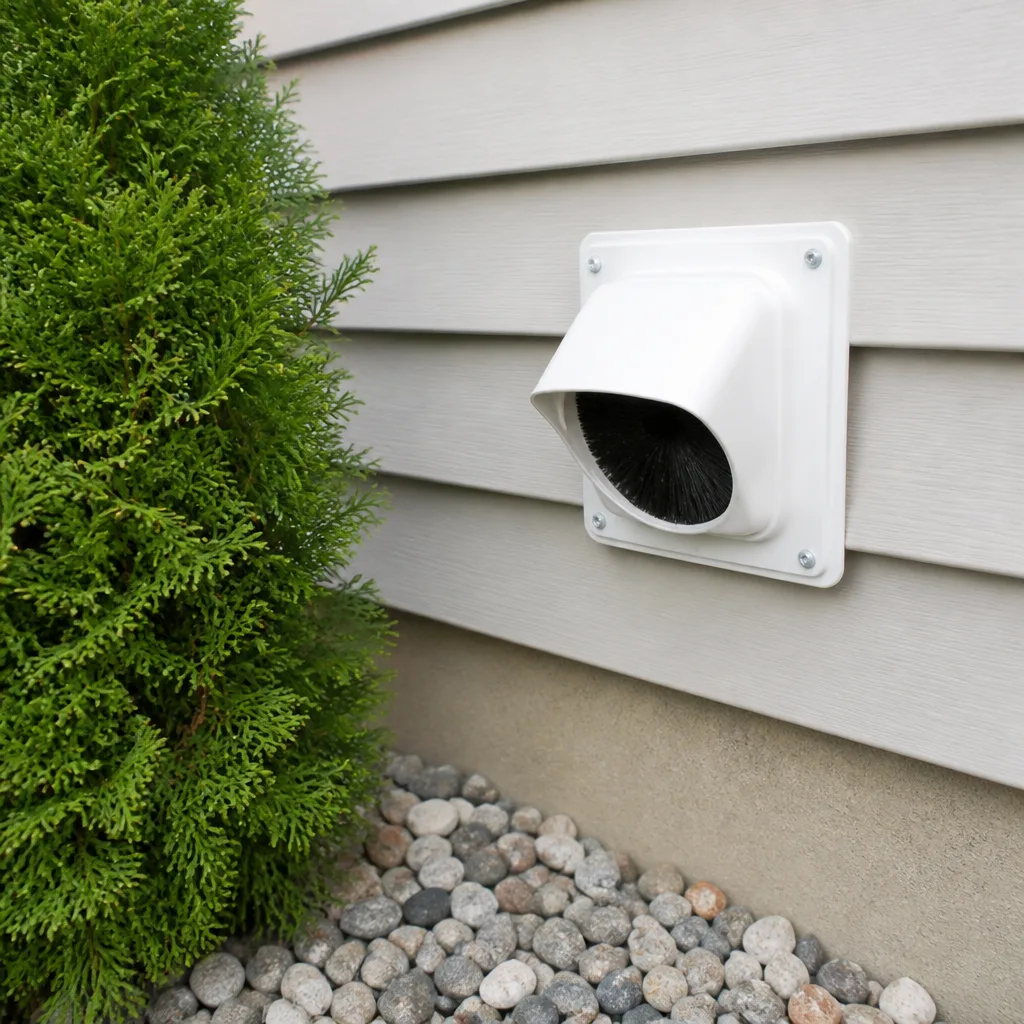 Dryer vent cleaning
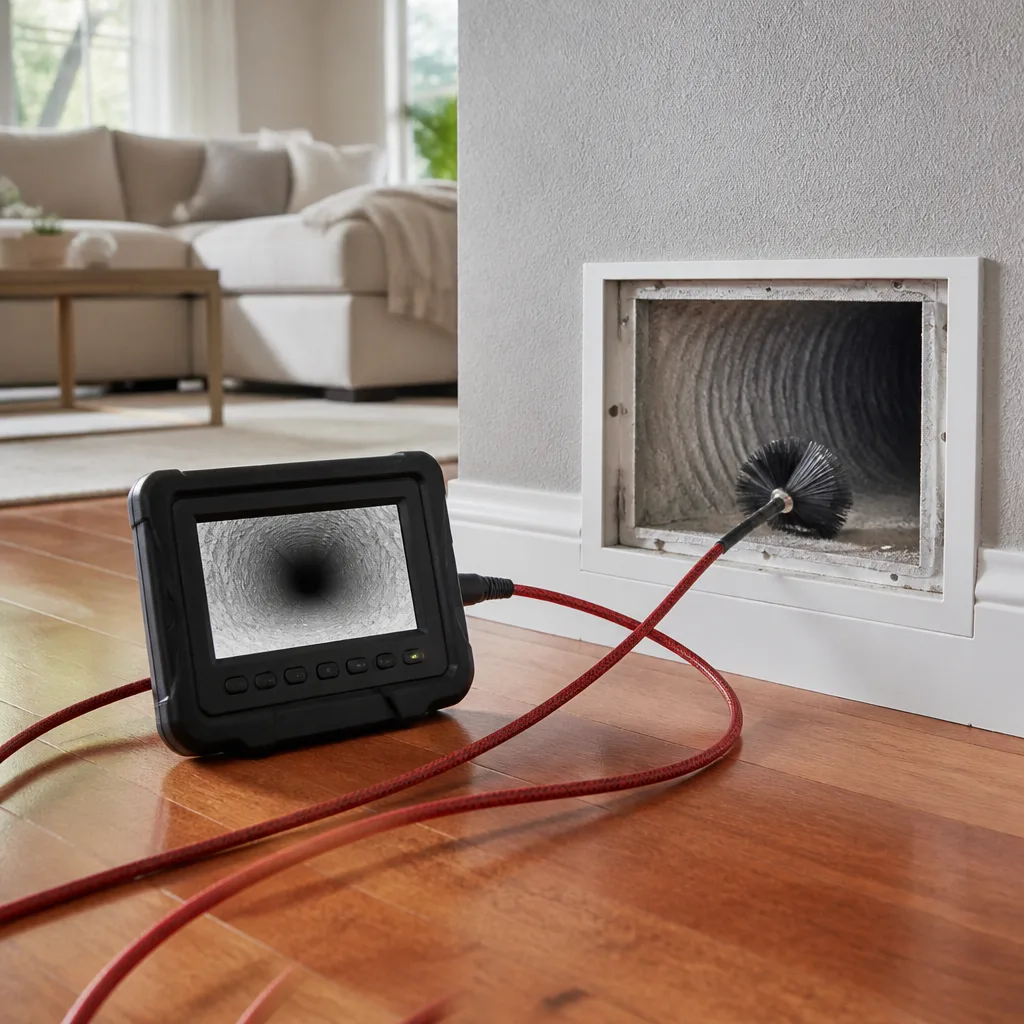 Camera inspection
 Sanitizing & deodorizing
Whole-system duct and dryer vent check with before-and-after photos - you see exactly what came out of your vents
That "$99 whole-house special" is a bait ad - the real number appears once they are in your hallway, or the "clean" is a shop-vac at the register. We photograph the inside of your ducts before and after instead.
Air Duct Cleaning Maintenance Schedule: What to Do and When
Most homeowners treat duct cleaning as a once-and-done chore, something to check off a list and forget for a decade. That’s the wrong model. The right way to think about it is a schedule, one you adjust the same way you adjust an oil change interval based on how and where you actually drive. A house full of shedding dogs running a furnace six months a year needs a very different rhythm than a low-occupancy townhome with a high-grade filter. In this guide we’ll walk through the load factors that set your real interval, how Westminster’s semi-arid climate and wildfire smoke seasons change the math, and exactly what to do between professional cleanings so the next one isn’t overdue.
Quick Answer
Plan on professional duct cleaning every 3 to 5 years for most homes, every 2 to 3 years for households with pets, allergy sufferers, recent renovations, or heavy heating-season use, and after any major HVAC replacement, water intrusion, or new-construction dust event. The single biggest swing factor is not the calendar, it’s your home’s load: occupancy, pets, filter grade, and how much fine particulate your local climate pushes indoors. In Westminster, wildfire smoke seasons and dry winters typically push the interval toward the shorter end.
Styles & brands we work with
- Whole-home duct cleaning
- Dryer vent cleaning
- Camera inspection
- Sanitizing & deodorizing
Table of Contents
- Why “Clean as Needed” Isn’t a Schedule
- Score Your Home’s Load in 5 Questions
- Westminster’s Climate Load: What National Guides Miss
- The Interval Schedule, Home by Home
- Between Professional Cleanings: What Actually Helps
- Why Your Filter Grade Moves Your Cleaning Date
- Events That Reset the Clock Entirely
- How to Verify the Job Was Done Right
Why “Clean as Needed” Isn’t a Schedule
The EPA’s frequently quoted guidance to clean air ducts “as needed” is technically correct and practically useless. It tells you the answer is conditional without telling you which conditions apply to your house. The result is that most homeowners default to either neglect (never cleaning) or marketing-driven panic (cleaning every year on a coupon). Both are wrong.
What “needed” actually means is this: your ducts need cleaning when the accumulated load inside them exceeds what your HVAC system and filter can functionally accommodate. That’s a measurable thing, sort of. Debris accumulates at a rate set by how much particulate enters the return side, which is set by how hard the system runs, how much dust your household generates, and how good your filter is at catching it before it makes it past the return plenum. Run the furnace hard through a Colorado winter with a MERV-6 filter and one shedding dog, and the collector plenum can look like a different system after two seasons than after five in a low-load home.
So the practical answer isn’t a number, it’s a scoring approach. Score your load, expect an interval based on that score, and adjust up or down as your household changes. That’s what the rest of this guide walks through, and it’s the approach we bring into every home we walk through in Westminster, whether it’s a townhome near the Promenade or a ranch house out toward Legacy Ridge.
Score Your Home’s Load in 5 Questions
Answer each of these five questions honestly. Your total score maps to a real starting interval, which you’ll adjust further based on the Westminster-specific factors in the next section.
- How many people and pets live here full-time? Two adults and no pets is a low-occupancy baseline. Add a person for every two full-time occupants past two. Add 2 points for one pet, 4 points for two or more. Shedding dogs and cats push a lot of dander and skin cells into the return side, and those are the particles that stick to duct walls.
- Does anyone in the household have asthma, seasonal allergies, or a diagnosed respiratory condition? If yes, add 3 points. This is the strongest single reason to shorten an interval, because the consequences of the same settled debris are much higher for those occupants.
- Has the home had a renovation, remodel, or drywall repair in the last three years? If yes, add 4 points. Drywall dust, sawdust, insulation fibers, and paint overspray all migrate into ductwork during construction, and they settle deep. A kitchen or bath remodel alone can load a system more than three ordinary years of living.
- What MERV rating is the filter you’re actually running? MERV-13 or better: subtract 2 points. MERV-8 to MERV-11: 0. MERV-6 or lower, or a fiberglass “builder-grade” filter: add 3 points. This is the factor most homeowners ignore, and it’s the one you can change on your own.
- How hard does the system run through heating season? If your furnace runs most days for six months and you keep the thermostat at 70 or above, add 2 points. If it’s a mild-usage household, 0.
Now total it up:
- 0 to 3 points: Low load. Healthy baseline is every 5 years, with a visual check at year 3.
- 4 to 7 points: Moderate load. Baseline every 3 to 4 years.
- 8 to 11 points: High load. Baseline every 2 to 3 years.
- 12 or more: Heavy load. Baseline every 2 years, with an in-between inspection mid-cycle.
That’s a starting schedule, not a fixed one. The next section adds the variables that make Westminster homes land on the shorter end of every range.
Westminster’s Climate Load: What National Guides Miss
Most duct cleaning schedules published nationally are written for a generic humid-subtropical household. That’s not us. Westminster runs a semi-arid climate with hard seasonal swings, and that turns out to matter enormously for what ends up inside your ductwork.
Wildfire smoke seasons
Through the summer and early fall, smoke from fires in the mountains and along the Front Range periodically settles into the metro. Smoke is fine particulate, and fine particulate is exactly what your filter is designed to catch but can’t fully knock down when the concentration spikes for weeks. Homes that run the furnace fan continuously during smoke events, deliberately circulating filtered air, actually load the return side faster than homes that shut the system down, because every cubic foot of smoky outdoor air that gets pulled in past a marginal filter deposits some of its particulate on duct walls. The rule of thumb: after a heavy smoke season with visible outside haze on many days, shorten your next interval by a year.
Dry winters and static-charged dust
Colorado winters are dry enough that indoor relative humidity regularly drops into the teens. Dry air means static charge, and static charge means dust particles stick to duct surfaces rather than blowing through. In humid climates, a lot of the dust in ducts would eventually get carried out in the airstream; here, it settles and stays. That’s actually good news for your indoor air on one level, since less of it goes airborne, but it means the settled load accumulates faster and doesn’t flush itself.
Furnace-heavy heating season
Westminster homes typically run heat from October or November into April or May. That’s six or more months of near-continuous air movement through the same ductwork every year, which is a heavier annual duty cycle than most of the country. Multiply that by the ten-plus years a typical homeowner goes between cleanings, and the accumulated load is substantial.
Put together, these factors push most Westminster households into the moderate-to-high load range from the scoring exercise above, even when the household itself seems unremarkable. A retired couple in a quiet townhome with one cat is still running a Colorado heating season through ductwork that hasn’t been cleaned in seven years.
The Interval Schedule, Home by Home
Here’s the practical version of the schedule, broken down by household type. Treat these as starting points and adjust up or down based on your load-factor score.
Low-load homes: every 5 years
Two adults, no pets, no allergy concerns, no recent renovation, running a MERV-11 to MERV-13 filter and keeping up with quarterly replacements. A five-year cycle with a mid-point visual check is plenty. These are the homes where a professional visit is genuinely a check-in as much as a cleaning, because there’s not much to remove when the system is well-filtered and the household has a low dust load.
Moderate-load homes: every 3 to 4 years
This is most Westminster households. Add a pet, add a kid, add a modest filter, and you’re here. The work at each visit is meaningful: contact cleaning pulls out the accumulated dust mat, HEPA-extracted so it doesn’t recirculate, and the technicians can give you an honest read on whether a repair concern is starting to develop in a joint, a boot, or a trunk line run.
High-load homes: every 2 to 3 years
One or more pets, at least one allergy sufferer, or a recent remodel. This is where a proper contact-cleaning job with a HEPA-contained vacuum genuinely pays for itself in reduced dust load against the same filter cycle. If you’re also running a marginal filter, upgrading the filter is the other half of the fix.
Heavy-load homes: every 2 years, with mid-cycle inspection
Multiple pets, severe allergies or asthma, and a renovation in the last 24 months. Two-year intervals at minimum, with a flashlight-and-mirror inspection at the one-year mark to see whether the collector plenum is already showing heavy accumulation. If it is, that’s your signal the household is running past what its filter can handle and the filter grade should go up before the next cleaning.
New construction or major renovation:
Immediately after construction wraps, not on the six-month-inspection schedule your builder hands you. Construction dust is a different category of load from household dust and it needs to come out before the system is put into normal service. See the reset-events section below for the full picture.
Between Professional Cleanings: What Actually Helps
The single most effective thing you can do between professional cleanings is change your filter on schedule. That sounds obvious, but the execution is where most households slip. Here’s the practical routine.
Filter change cadence
- Fiberglass or MERV-6: Every 30 to 60 days. These filters have very little holding capacity and clog fast. They’re cheap and they do almost nothing for indoor air quality, but if you’re running one you must change it constantly.
- MERV-8 to MERV-11 pleated: Every 60 to 90 days. Manageable mid-range.
- MERV-13 or better: Every 3 to 6 months in a low-load home, but drop to every 60 to 90 days during heavy use or a smoke event. High-MERV filters catch more but load faster.
- Thick media cabinets (Honeywell or Aprilaire, 4- or 5-inch): Every 6 to 12 months, per the cabinet’s own specification. If you’ve got one of these systems, our technicians can check the filter and cabinet fit during a cleaning visit and flag a filter that’s been in past its reasonable service life.
Return grille inspection
Every 90 days, pull the return grille and look at what’s packed against it. A grille that’s visibly dark with dust after 60 days is telling you the filter downstream is failing or under-spec’d. Hair, pet fur, and lint accumulating on the grille face is normal; a felted mat that’s a full millimeter thick is not. That’s the visual signal to check the filter immediately.
What a flashlight check can and can’t tell you
Shine a bright flashlight into a supply register and a return register. What you can see: dust coating visible duct interior within arm’s reach of the register, debris at the boot, and whether the register is seated properly against the drywall. What you can’t see: the trunk lines, the plenum at the air handler, the interior of the coil cabinet, and any settled debris in horizontal runs. The flashlight check is a coarse screen, not an inspection. Don’t use it to tell yourself the system is clean, because the visible 12 inches of any duct is not representative of the 40 feet beyond it.
More on the filter side in the next section, which is where most households find a real opportunity.
Why Your Filter Grade Moves Your Cleaning Date
The MERV rating of your filter is the single factor you can change on your own that most directly extends or shortens your duct cleaning interval. Here’s how that works in practice.
Your return duct is a sieve. It picks up whatever the household airstream happens to carry past it, and the filter is the final barrier before the air enters your HVAC equipment. Run a MERV-6 filter and you’re catching large particles, but fine dust, dander, and smoke particles pass through and settle downstream on the duct interior. Run a MERV-11 or MERV-13 and you’re catching much more of that airstream load at the filter, where you can throw it away every 90 days, rather than at the duct wall where only a professional cleaning can remove it.
Put simply: upgrading from a MERV-6 to a MERV-11 filter can legitimately move a moderate-load Westminster household from a 2-to-3-year interval to a 3-to-4-year interval. That’s not a small change. It’s also not free. Higher-MERV filters cost more per filter, they load faster, and on some older systems they can increase static pressure enough to affect airflow. That’s a conversation to have with an HVAC technician: ask whether your system can handle MERV-11 to MERV-13 without a static pressure problem, and upgrade accordingly.
The high-MERV media cabinet route is worth considering if the upgrade fits your household. A 4- or 5-inch media cabinet from Honeywell or Aprilaire gives you a much larger filter surface area, which means high filtration at reasonable static pressure and a filter that lasts 6 to 12 months between changes. Our technicians are set up to work on and around those systems, so if you already have one (or want to talk through one), that’s a conversation we can have during a duct cleaning visit rather than a separate call.
The bottom line on filters: better filter, longer interval, cheaper cleaning cycle. Cheap filter, shorter interval, more frequent cleaning. The math isn’t close.
Events That Reset the Clock Entirely
There are a handful of events that don’t just shorten your interval, they reset it to zero. If any of these happen, the clock starts over as of that event, not from your last cleaning date.
- New construction or a major remodel. Immediately after the work wraps. Construction dust, drywall dust, insulation fibers, and paint overspray migrate into the duct system throughout the project. Schedule a cleaning after the punch list is closed, not before. A towel taped over the registers during the project helps but doesn’t fully protect the system.
- HVAC equipment replacement. When the furnace, air handler, or AC coil is replaced, the contractor works around the plenum and cabinet. Debris, insulation fibers, and dust from the work get into the ductwork in ways that don’t show up until the system runs. Cleaning after the install is standard practice on a new system.
- Any water intrusion event near ductwork. A roof leak, a burst pipe, a condensate overflow, a basement flood that came anywhere near a return trunk. Ductwork is metal and fiberglass board, and once fiberglass liner has been wetted, it’s an ongoing problem. See our Ridgeway Air Duct Cleaning home page for the full scope of what we do, because a water event may mean repair, not just cleaning.
- Pest intrusion. Rodents, squirrels, or birds get into a duct run, and there is residue, nesting material, and other material left behind that needs physical removal plus HEPA containment. This is not a “wait until next cycle” situation.
- Mold discovery. Visible mold in or around a register is a same-week call. It’s also a signal of a moisture source upstream that needs to be found and fixed, not just cleaned up.
- Extended vacancy followed by occupancy. A house that sat empty for a year and is now being lived in should get a cleaning before the first heating season, because the return side has accumulated whatever settled during vacancy and it’s now going to be pushed into the living space.
If any of those events have happened and you haven’t yet scheduled, that’s a same-week call, not a next-cycle call. Call (844) 643-7197. We answer 24/7. Fast dispatch from 7am to 7pm, Sunday through Friday.
How to Verify the Job Was Done Right
Homeowners in Westminster ask us this more than any other question, and it deserves a straight answer. The reason so many people distrust duct cleaning is that the industry has a coupon-driven segment where the technician arrives, blasts air through the system from one register, collects a flat fee, and leaves. That job doesn’t remove duct-wall debris; it redistributes it. So the question is fair: how do you know the job was actually done?
Here’s what to look for on the day of service, regardless of which company you hire.
- Before-and-after photos of your own ducts. Not stock photos. Photos of your return plenum, your trunk lines, and whichever run had visible accumulation before the cleaning. Any company worth hiring takes these as a matter of course and provides them to you.
- Equipment visible on arrival. A contact cleaning system (like Rotobrush), a HEPA-rated vacuum (like Nikro), and containment or negative air equipment (like Abatement Technologies) if the job warrants it. If the equipment isn’t in the house, the job isn’t happening.
- One clear price for the whole system, agreed before work starts. Not per-vent pricing, not a coupon price that turns into a real price after inspection. The written estimate should reflect what the whole system needs and the final price is set by that estimate.
- Filter station and return plenum checked. A proper cleaning visit includes removing the return grille and checking what’s accumulated there, and evaluating the filter that’s in place.
- Registers and boots put back correctly seated. Small thing, but the difference between a technician who knows the job and one who doesn’t.
The core process difference comes down to contact cleaning versus air-only. Rotobrush physically agitates the duct wall with rotating brushes while a HEPA vacuum captures the loosened material at the same time, so what’s loosened comes out. Air-only approaches push loosened material downstream, which means some of it redeposits on the next run and some of it blows out into your living space. The difference is visible in the before-and-after photos, and that’s why we take them on every job.
Common Mistakes to Avoid
- Chasing the coupon. A price that looks dramatically lower than the rest of the market is a price that doesn’t reflect whole-system contact cleaning and HEPA extraction. The technician will either do less than you think or find “urgent problems” once they’re in the house. Ask what equipment will be in your home and what the whole-system price is in writing, before anyone shows up.
- Waiting for visible dust at the registers. The 12 inches of duct you can see at the supply register is the cleanest part of your system, because that’s where the highest-velocity air moves. The debris you don’t see is in the trunk lines and the plenum, where the airstream slows and deposits. Waiting for visible grille dust means waiting years too long.
- Skipping the filter change between cleanings. A fresh cleaning on a MERV-6 filter starts loading the same day it’s done. If you’re going to spend on cleaning, spend the additional $15 to $25 on a properly-spec’d filter and change it on schedule. It’s the cheapest part of the whole system and the one that determines how fast everything else re-soils.
- Assuming a professional cleaning is a one-time event. Twelve to fifteen years of dust accumulation in a Westminster home does not “get fixed” by one cleaning and then never again. The system keeps collecting. The schedule keeps running.
- Ignoring an HVAC replacement as a trigger. Contractors cutting into the plenum leave sawdust, insulation fibers, and metal shavings in places you can’t see. Cleaning after the install is standard, not optional, and pushing it off means the first heating season is running all that new debris through the coil and blower.
- Believing a “whole-house sanitizing” spray replaces cleaning. A chemical fog deposited over top of accumulated dust doesn’t remove the dust, and it doesn’t address the accumulated debris downstream. If a company’s pitch is a fog with no mention of contact cleaning, the underlying job isn’t being done.
- Failing to check ductwork after a water event. A small roof leak or a basement flood near the return trunk can leave wetted fiberglass liner that stays damp and becomes a problem. Water intrusion near ductwork is a schedule-reset event whether or not the system still “runs fine.”
See the difference
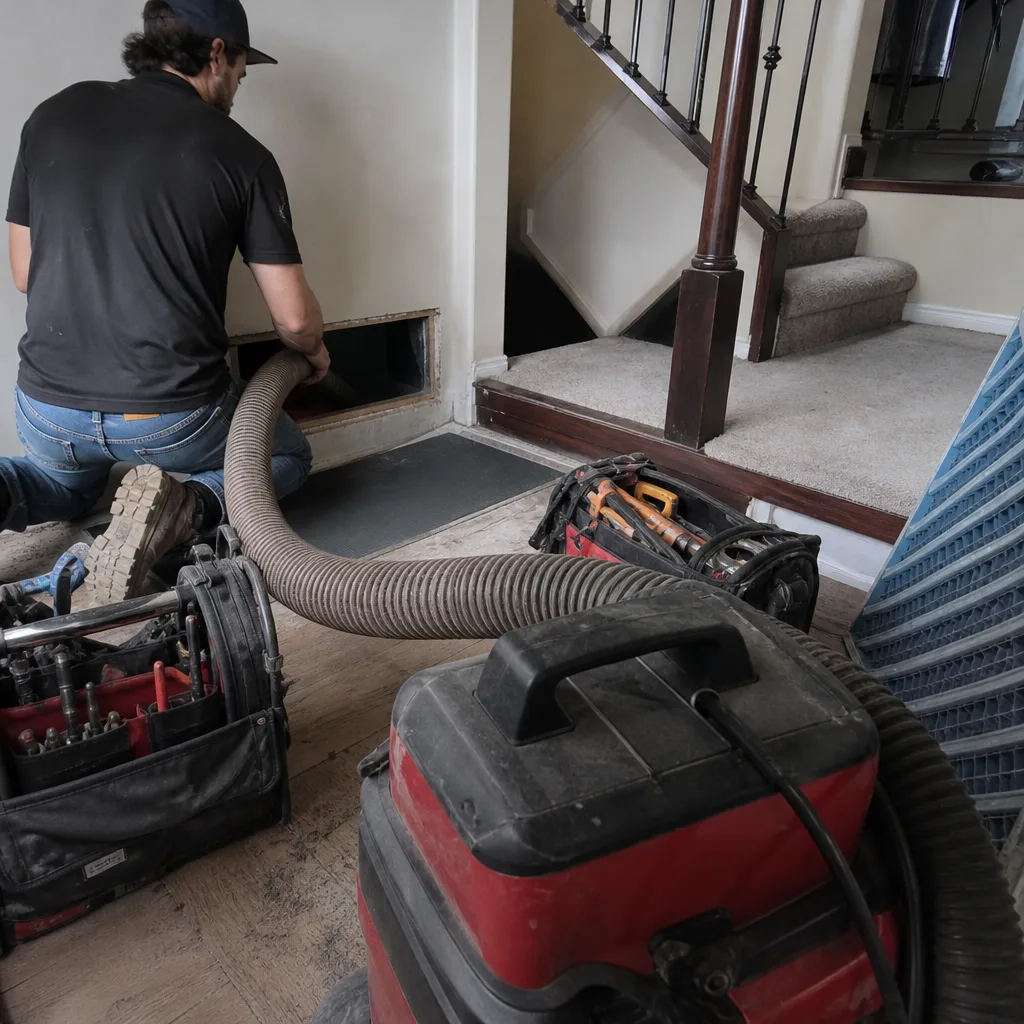 Before
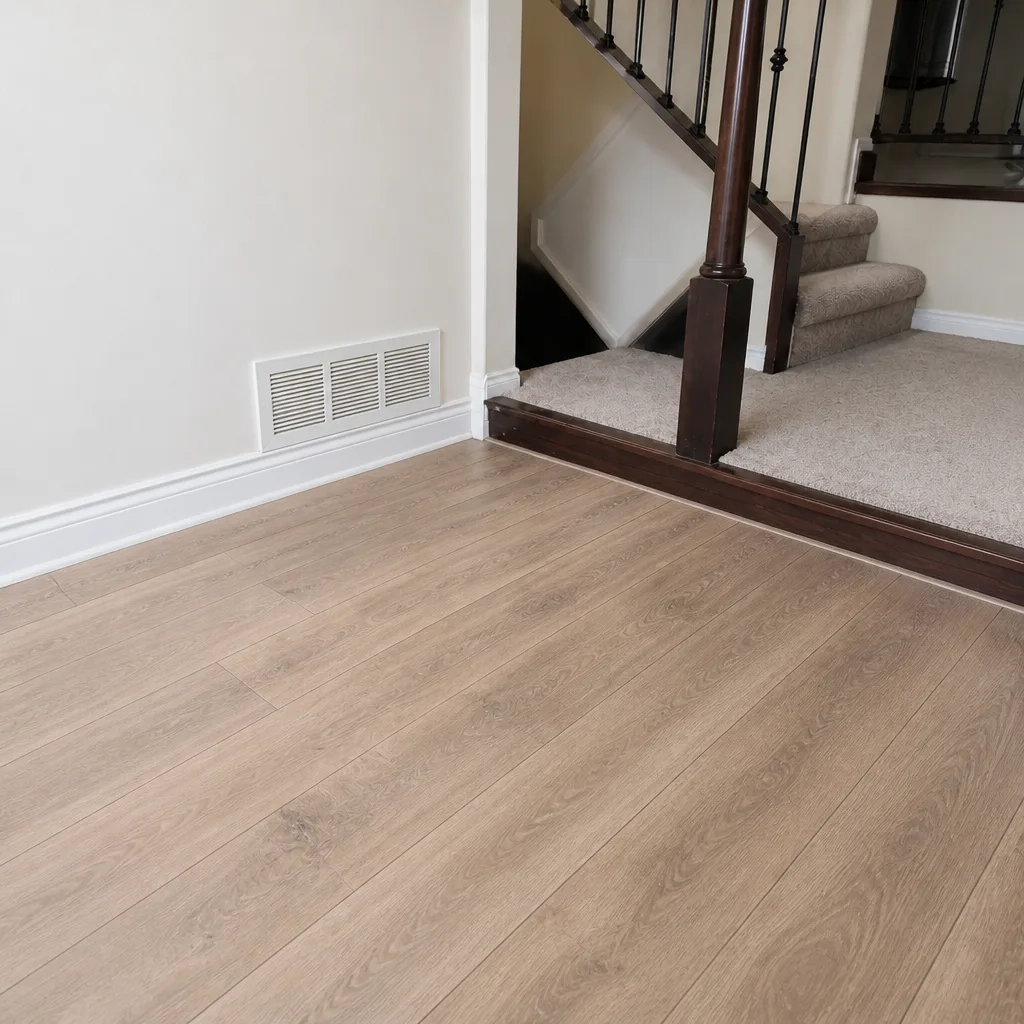 After
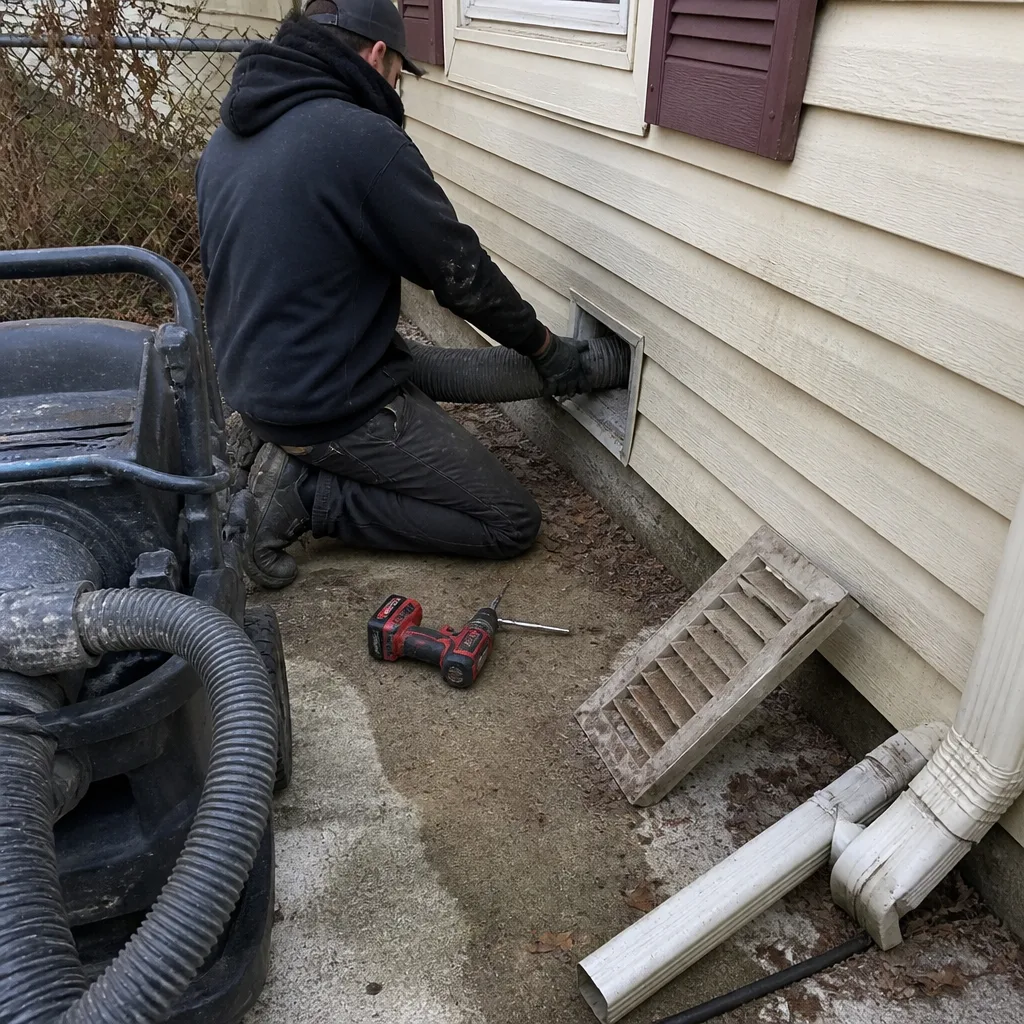 Before
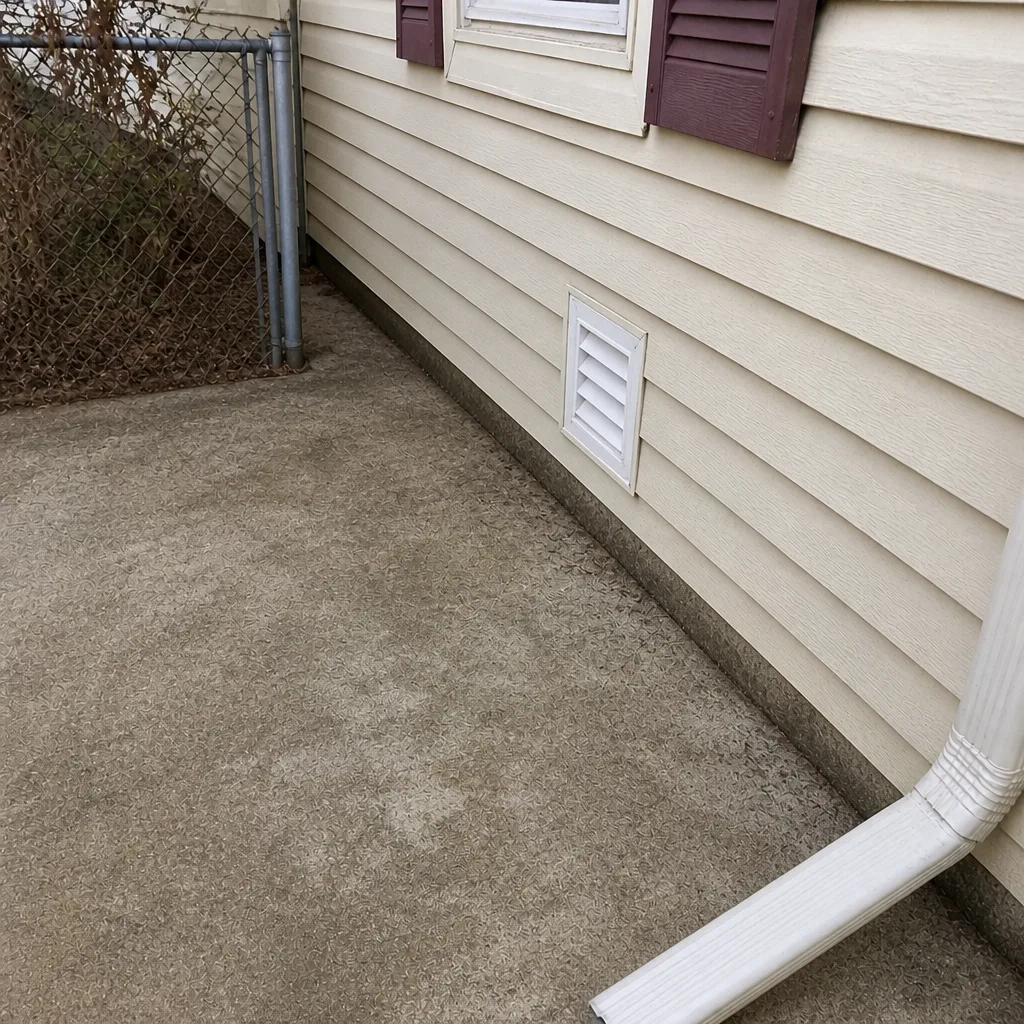 After
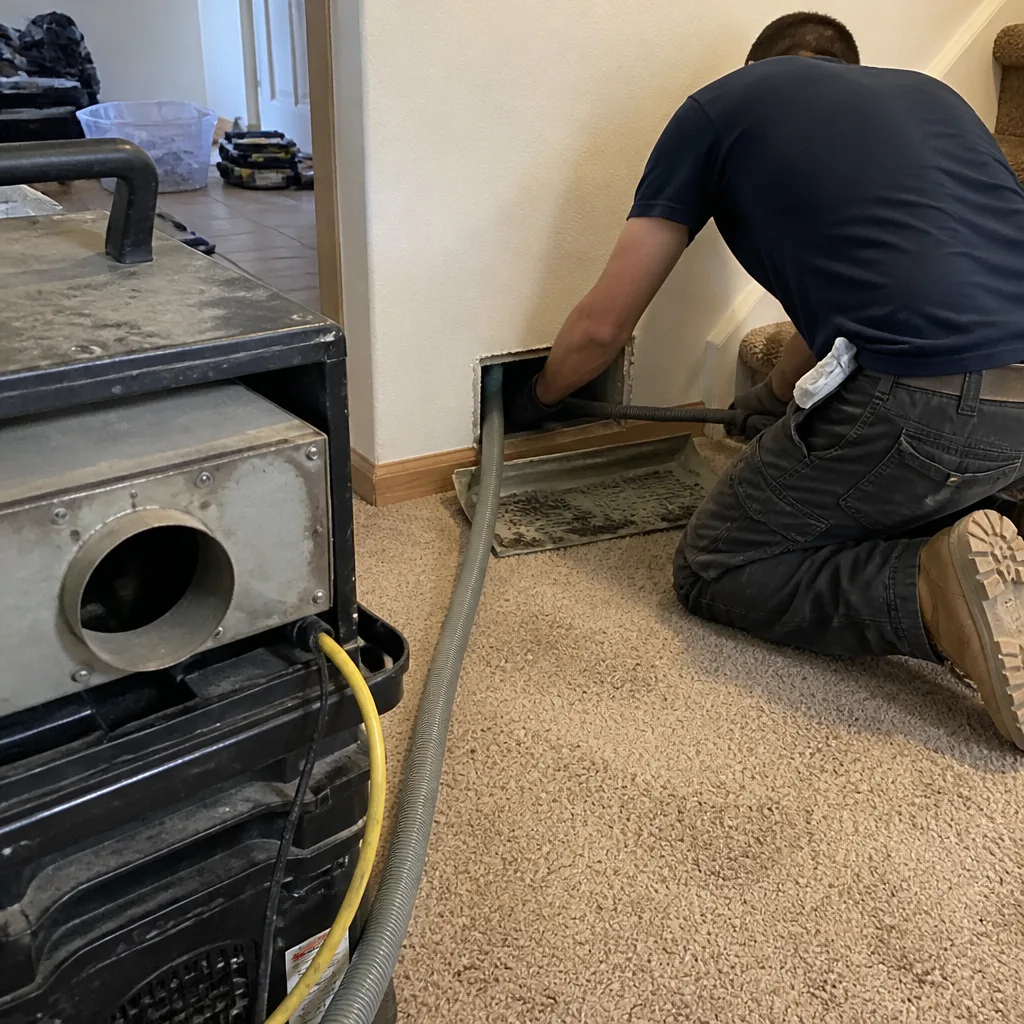 Before
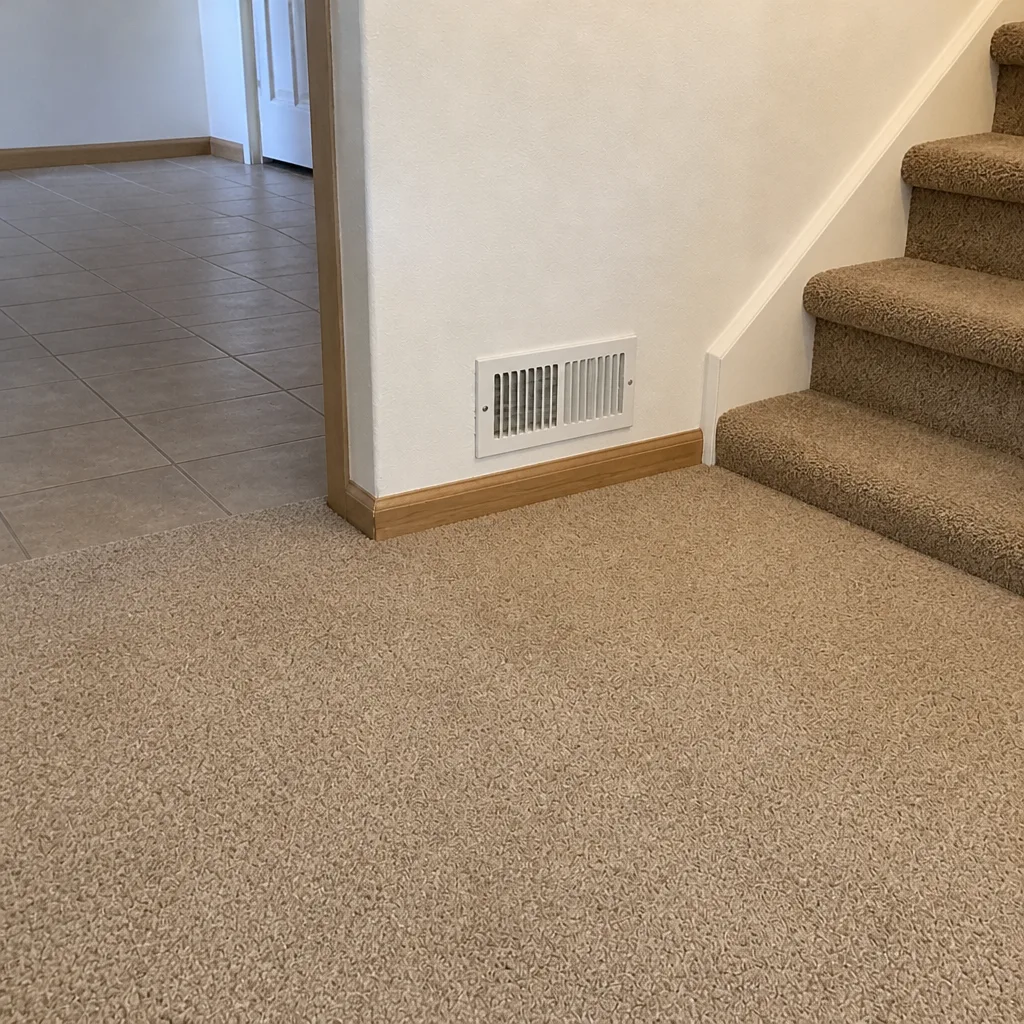 After
When to Call a Professional
Some duct conditions are fine on a normal schedule and don’t need a special call. Others need a technician now, not at the next interval. Call a professional when: any visible mold shows up inside a register, a supply duct, or the air handler cabinet; there’s a pest intrusion in any part of the duct system; water damage has touched ductwork; a renovation or HVAC replacement has just wrapped; the household includes someone with a diagnosed respiratory condition that seems to get worse when the system runs; or you can smell stale, musty, or animal odors coming from a supply register.
Ridgeway Air Duct Cleaning offers free estimates in Westminster. Our technicians have up to 8 years of experience and work with professional-grade Rotobrush and Nikro equipment that physically removes debris rather than moving it around. Call (844) 643-7197 to schedule an assessment. We answer 24/7. Fast dispatch from 7am to 7pm, Sunday through Friday.
Frequently Asked Questions
Most Westminster homes should plan on professional cleaning every 3 to 5 years, and 2 to 3 years if the household has pets, allergy sufferers, recent renovations, or heavy heating-season use. The Westminster-specific factors – wildfire smoke season, dry static-prone winters, and a six-month furnace season – generally push the interval toward the shorter end compared to national averages. Call (844) 643-7197 for a free estimate specific to your home.
No, annual cleaning is usually not necessary outside of specific circumstances like severe asthma or heavy pet load. Very high-frequency cleaning is often a marketing-driven schedule, not a technical one. The scoring approach in this guide is a better fit: match the interval to your home’s load and adjust as that load changes over time. Call (844) 643-7197 and we’ll walk you through a realistic schedule for your household.
Yes. Upgrading from a MERV-6 to a MERV-11 filter can legitimately extend your cleaning interval by a year or more, because more of the load gets captured at the filter instead of settling on duct walls. The catch is that higher-MERV filters can increase static pressure on some older systems, so ask an HVAC technician whether your system handles it before making the switch. Our technicians can check the filter cabinet on a Honeywell or Aprilaire system during a cleaning visit.
Change the filter on schedule, inspect the return grille every 90 days for heavy accumulation, and periodically shine a flashlight into a supply and a return register for gross visual signals. Beyond that, leave it alone. Do not try to clean duct interiors yourself with a shop vac, because you can dislodge settled debris that ends up distributed through the system, and you can damage fiberglass duct liner. Call (844) 643-7197 when your interval comes up, or sooner if any reset event applies.
Yes. Major renovations, and even moderate ones that involve drywall work, load the duct system with construction dust, insulation fibers, and drywall particles, and that debris settles deep into horizontal runs. Cleaning after the project wraps – with contact cleaning and HEPA-contained extraction – is standard practice and resets the schedule to zero. It also gives you a fresh starting point for the next interval. Call (844) 643-7197 to schedule once the punch list is done.
No. Dryer vents need more frequent attention, and that’s a safety matter rather than an air quality one. Lint accumulation in a dryer vent is a fire risk that grows steadily between cleanings, and a partial clog makes the dryer run hotter and longer. Most households should plan dryer vent cleaning every 1 to 2 years, or more often with heavy laundry loads, and it’s a natural add-on to a duct cleaning visit. Call (844) 643-7197 for a combined estimate.
The Bottom Line
A duct cleaning schedule isn’t a number, it’s a load-factor calculation that changes as your household changes. Score your home on occupancy, pets, allergy status, renovation history, and filter grade, and use that score to set a 2- to 5-year planning interval. For Westminster households, add in the local climate factors: wildfire smoke seasons, dry static winters, and a six-month heating season push most homes into the moderate-to-high range even when the household seems unremarkable. Upgrade the filter, change it on schedule, inspect the return grille quarterly, and call when any reset event hits. That’s the whole schedule, and it’s a lot simpler than the marketing suggests.
When it’s time for a proper cleaning, call Ridgeway Air Duct Cleaning at (844) 643-7197 for a free estimate. We use Rotobrush contact cleaning, Nikro HEPA extraction, and Abatement Technologies containment equipment to remove debris from your system rather than move it around, and we’re set up to work on and around Honeywell and Aprilaire IAQ equipment when a filter upgrade is worth considering. Estimates are free, and the price is set per job by the written estimate. Call (844) 643-7197. We answer 24/7. Fast dispatch from 7am to 7pm, Sunday through Friday.
Written by the team at Ridgeway Air Duct Cleaning.