
Last updated November 16, 2026
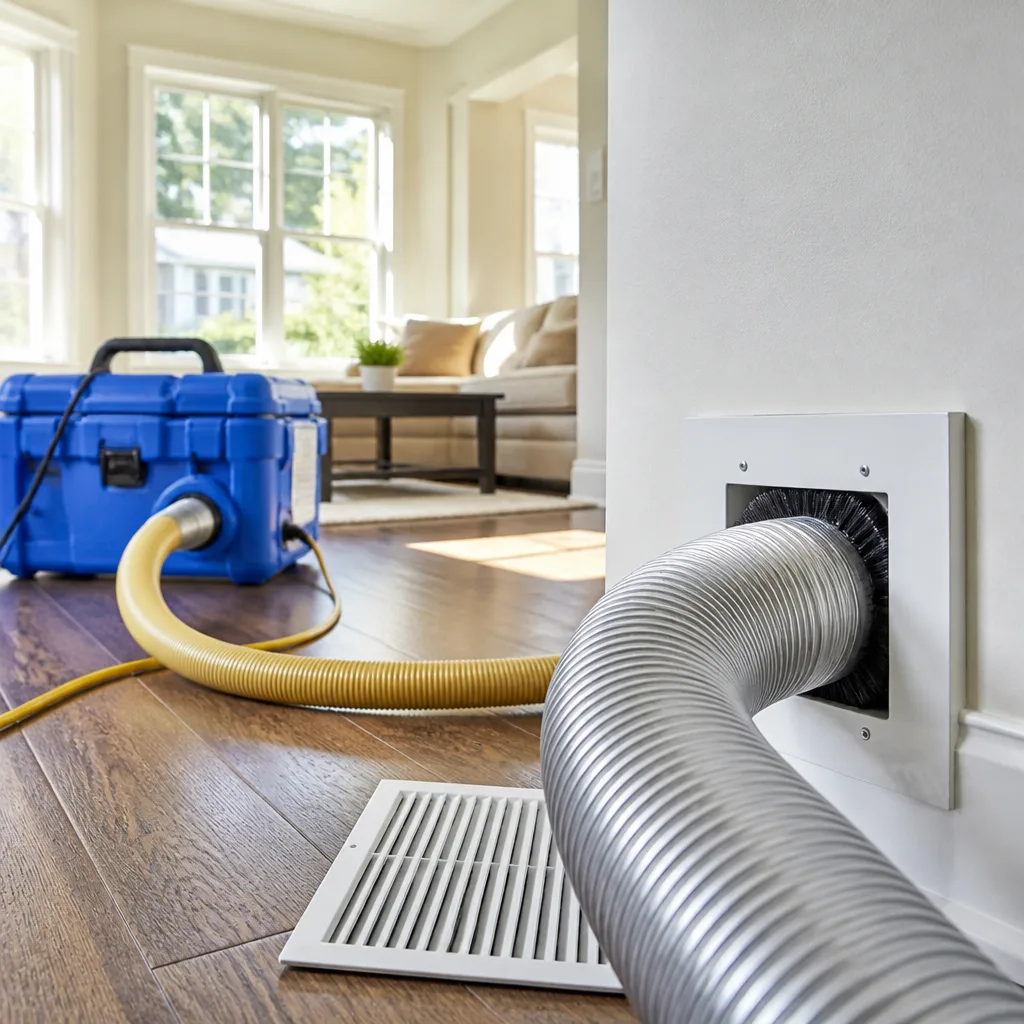 Whole-home duct cleaning
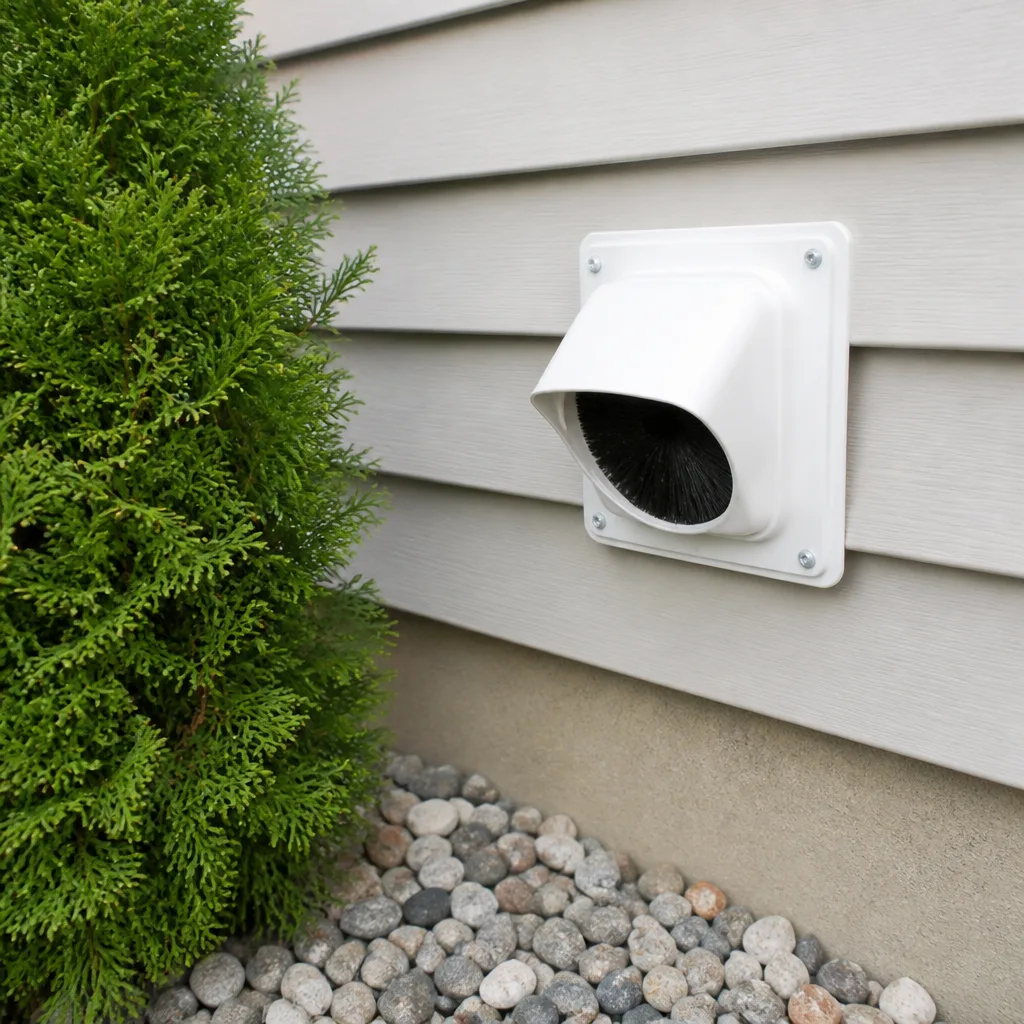 Dryer vent cleaning
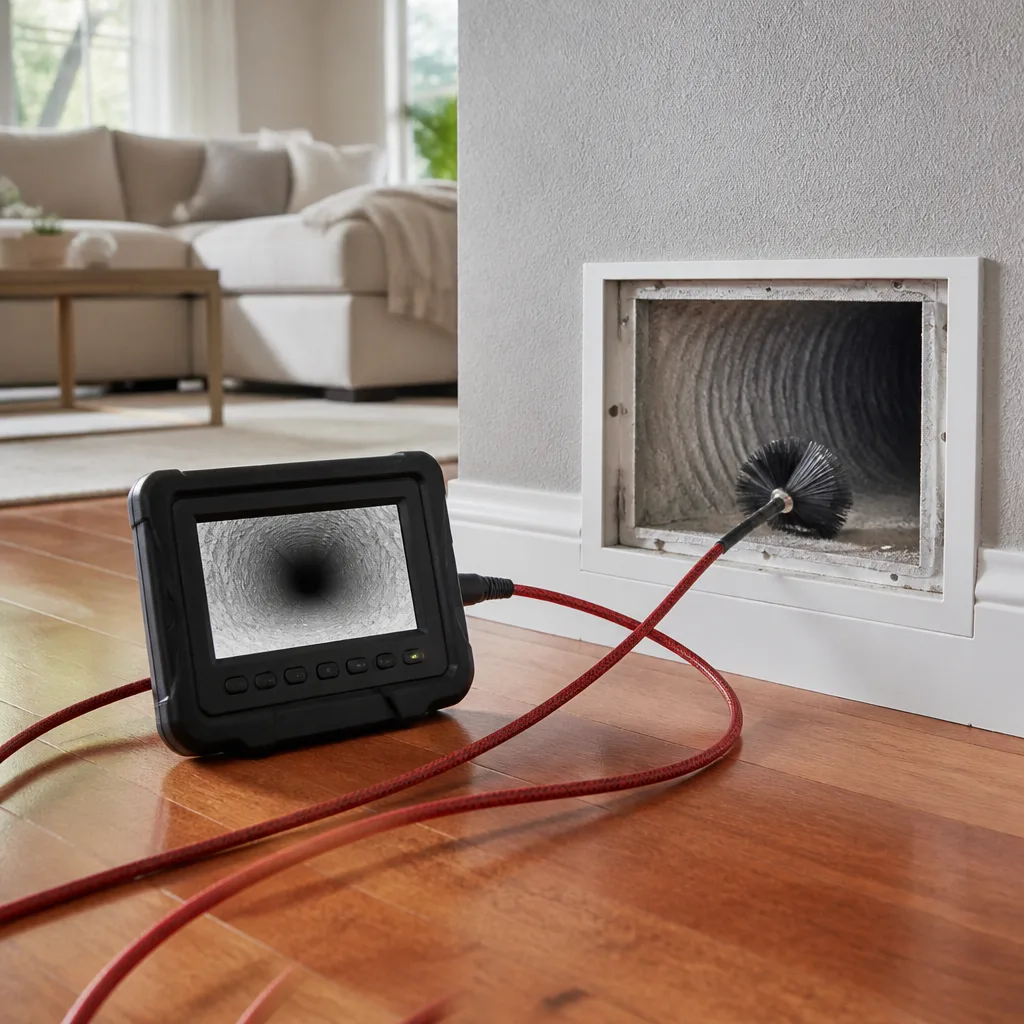 Camera inspection
 Sanitizing & deodorizing
Whole-system duct and dryer vent check with before-and-after photos - you see exactly what came out of your vents
That "$99 whole-house special" is a bait ad - the real number appears once they are in your hallway, or the "clean" is a shop-vac at the register. We photograph the inside of your ducts before and after instead.
Seasonal Air Duct Cleaning Care for Westminster: Year-Round Homeowner’s Guide
Most homeowners treat duct cleaning as a once-a-year box to tick, usually in whatever month the coupon lands in the mailbox. That single-event approach misses the real story of what happens inside a Westminster duct system over twelve months. This city gets four distinct seasonal stress events: spring pollen infiltration, summer wildfire smoke, the fall furnace restart, and winter static-charge dust buildup. Each one loads your ducts differently, and each opens a preventive window most homeowners never use. Manage those windows and you can genuinely stretch the time between cleanings. Ignore them and you’ll be cleaning more often than you need to. This guide walks through the full Westminster calendar, season by season, so your cleaning schedule fits how your house actually lives and breathes.
Quick Answer
Air duct cleaning in Westminster works best as a seasonal system, not an annual ritual. The highest-value cleaning window is late winter into early spring, right before your cooling system starts moving settled debris through the house. A second lighter pass in early fall, before you seal up for winter, keeps summer wildfire smoke and fall dust from baking into the duct lining. Most Westminster homes do well on a two-year cycle built around those two windows, with filter changes and a visual inspection in between.
Styles & brands we work with
- Whole-home duct cleaning
- Dryer vent cleaning
- Camera inspection
- Sanitizing & deodorizing
Table of Contents
- Why a Single Annual Cleaning Misses the Point
- Spring: The Post-Winter Startup Window
- Summer: How Wildfire Smoke Behaves in Duct Linings
- Fall: The Furnace Restart Checklist
- Winter: Static Charge and Dust Adhesion
- Building a Two-Year Cycle Around These Events
- Filter Strategy for Westminster’s Four Seasons
- What You Can Check Yourself and What Needs Equipment
Why a Single Annual Cleaning Misses the Point
The annual cleaning schedule most homeowners follow is arbitrary. It comes from a filter manufacturer’s recommendation or a sales pitch, not from how a Westminster home’s HVAC system actually cycles through the year. And a single cleaning date treats every month the same when the reality is four very different loads.
Here’s what that means in practice. Debris settles in duct systems when the system is off, and it gets picked up and redistributed when the system turns on for the first time in a new season. That start-of-season redistribution is what most homeowners actually notice as a dusty smell or a spike in visible dust. The biggest single redistribution event in a Westminster home is the first cooling run of spring, when a house that’s been way down on airflow for months suddenly pushes air through every branch at full volume.
The second-biggest is the first heating run of fall, when the furnace blower pushes heated air through ducts that have been collecting summer debris while the AC ran less.
That pattern has a direct consequence: a cleaning timed to a random month may land in summer, when your ducts are quietly rusting out a load of pollen from March. Or it may land in spring, missing the summer smoke that hasn’t happened yet. Neither is fatal, but neither uses the preventive windows the calendar offers.
Westminster’s climate adds a wrinkle the annual model ignores. Dry winters and dry summers load duct walls with statically charged dust that sticks harder than it would in a humid climate. So the cleaning itself has to physically agitate the duct wall, not just blow air through it. That’s the reasoning behind Rotobrush contact cleaning: the equipment agitates debris from the lining before extracting it. Air-only cleaning leaves the statically bonded layer behind.
Spring: The Post-Winter Startup Window
Spring is the highest-risk period of the year for a Westminster duct system. Here’s why: through the winter, your furnace runs nearly continuously, pulling return air from across the house and depositing fine dust on duct walls. When the cooling season kicks in, typically in March or April, that settled layer gets picked up by a fresh, higher-velocity airflow path. If your ducts aren’t cleaned first, that winter load is distributed through every room in a matter of days.
Before your first cooling run of the year, work through this inspection list:
- Look at the return grilles. A visible grey film on the return covers means the filter isn’t catching what’s getting past it, or bypass at the filter frame is letting debris through.
- Check filter fit. A filter that’s undersized for its slot lets unfiltered air bypass the edges, which is one of the most common ways duct systems load up quickly.
- Smell-tests the first blast. Turn the system on for ten minutes after the season switch. A dusty or musty smell at the registers usually means settled dust is lifting off duct walls.
- Look for condensation. Any moisture on the air handler or duct boots in spring is worth investigating before spring humidity rises further.
- Inspect the blower wheel through the service panel with the system off. A caked blower wheel is a sign the rest of the system needs attention too.
If you find visible dirt in the returns, a blower wheel that’s caked with dust, or that dusty smell on the first run, book a cleaning before the cooling system does its first full-volume pass. On timing, the second half of March or the first half of April is the ideal window in Westminster, before pollen season fully loads up. If you’ve already run the AC through a dry spring, you can still benefit from a cleaning in May, but you’re catching up rather than preventing.
Homeowners in older Westminster homes, including a lot of the mid-century housing in the older sections of the city, are more likely to have duct systems with design quirks that accumulate debris faster. Return paths in these homes are often undersized, and the ducts are more often flex or older rigid metal with loose joints. A spring cleaning lets a technician spot those mechanical issues while they’re small.
Summer: How Wildfire Smoke Behaves in Duct Linings
Wildfire smoke entering a duct system behaves differently than household dust, and this is where a lot of homeowners get surprised. Smoke is fine-particle: the bulk of it is in a size range that standard MERV filters catch only partially. But the deeper problem is that smoke particles carry combustion byproducts, and those byproducts settle into duct lining material and stay there long after the visible haze clears.
You can’t clean away a smoke event that hasn’t happened yet. What you can do is clean before the smoke season, so the duct system starts from a clean baseline, and then run a filtration strategy that reduces what deposits during smoke events.
Key differences between typical dust and wildfire smoke in a duct system:
- Particle size: The smoke that reaches your duct walls is the fine fraction, which means filter efficiency at the small-particle end matters more than the overall MERV number.
- Adhesion: Smoke-borne residue bonds to duct surfaces and doesn’t lift off with ordinary air movement. Contact cleaning does more than a higher-velocity air blast.
- Residence time: Smoke that deposits in the duct lining stays put for months. It doesn’t blow through and leave.
- Sensitivity: Homes with asthmatic or allergy-prone occupants notice smoke residue in the ducts for weeks after the outdoor air clears.
During active smoke events, tightening the house is the right call, but it means the duct system is now your primary filter. Running a higher-efficiency filter is useful, but check that it doesn’t restrict airflow in a system that wasn’t designed for a high-pressure-drop filter. If you’re choosing an upgrade, Honeywell and Aprilaire filter cabinets are built to hold higher-efficiency media without choking the blower. They also give the system a better shot at keeping fine smoke particles out of the duct lining in the first place.
Westminster’s Front Range location means smoke episodes come in unpredictable waves, driven by conditions far from the city. A homeowner can’t forecast the summer. What they can do is start the season clean, run appropriate filtration, and know that their duct system has physical contamination from the previous season cleared before the next smoke wave arrives. If you need a professional pass on the whole system before smoke season begins, air duct cleaning scheduled in late May or early June is the right window.
Fall: The Furnace Restart Checklist
Fall is the second high-value cleaning window, and it’s also when your furnace gets its longest uninterrupted workout of the year. Anything wrong with the mechanical side of your system should be caught before you seal up the house for winter.
Here’s the fall restart sequence we walk through for a Westminster home:
- Heat exchanger inspection. Your furnace heat exchanger needs a physical inspection by a qualified HVAC technician, especially a combustion check if your furnace is gas-fired. This is not a check a homeowner can perform safely; a cracked heat exchanger can vent carbon monoxide into the supply airstream.
- Blower wheel inspection. The blower wheel is what pushes air through the entire duct system. A caked or unbalanced wheel cuts airflow, which is what drives both comfort complaints and accelerated dust settling.
- Duct connection check. Look at the duct boots at the registers and the main trunk connections. Loose tape, sagging flex runs, and popped joints are common in Westminster homes that have gone through a few seasonal expansion cycles.
- Filter replacement and cabinet check. Change the filter before the heating season, and inspect the filter cabinet. A filter cabinet that isn’t sealing properly is bypassing unfiltered air straight into the blower and ducts.
- Return grill cleaning. Vacuum the return grills and register covers. It’s a small thing but it visually confirms whether the previous season left debris in the return path.
- Duct cleaning if indicated. If the spring cleaning was skipped, or if the fall inspection turns up visible dust in the returns or blower wheel, this is the time to book the cleaning, before the house seals up for winter.
The right time to schedule the fall cleaning in Westminster is late September into mid-October, after the cooling season has wound down and before the heating season settles in. Homeowners who wait until the first cold snap often find the system stressed the same week, which pushes the cleaning out past the window that would have done the most good.
If you have a high-efficiency furnaces system with an electronic air cleaner, or one of the Aprilaire or Honeywell media cabinets, the fall check is also your chance to confirm the IAQ equipment is still functioning. A failed electronic air cleaner is often invisible to the homeowner until the filter cartridge gets visibly black. The same technician who cleans the ducts can evaluate and service the IAQ equipment on the same visit, which is why we install and work on those brands.
Winter: Static Charge and Dust Adhesion
Westminster winters are dry. That dry air does something specific to your duct system that humid-climate advice ignores: it loads the duct walls with statically charged dust that adheres harder than it would in a wetter climate. This is why a duct system that looks clean after a fall cleaning can look visibly loaded by mid-February.
What’s happening: as indoor relative humidity drops, dust particles pick up a static charge from friction against duct walls and airflow. Charged particles stick to duct surfaces, forming a layer that ordinary air movement won’t dislodge. Every time the system runs, it redistributes a fraction of that charged layer into the living space. Homes without humidification feel this most, and it explains the “it’s always dusty in here in winter” complaint that a lot of Westminster homeowners have learned to live with.
What filter strategies partially compensate:
- Upgrade to a media filter cabinet (Honeywell or Aprilaire) if the system can handle the static pressure. Media cabinets hold a deep filter and don’t restrict airflow the way a high-MERV 1-inch filter does.
- Run a higher-efficiency media filter through winter and replace it on the manufacturer’s schedule, not on a “looks dirty” basis. In dry winters, a filter can load up faster than the homeowner expects.
- Add humidification if the home’s winter humidity is very low. A whole-house humidifier doesn’t clean duct walls, but it reduces the static charge that causes winter dust to stick in the first place. If a humidifier is on your list, the right technician to consult is the one who’s seen your duct system, not someone who only sells humidifiers.
- Keep the blower running at low speed if your system supports it. Constant low-speed circulation with good filtration tends to keep particle concentration lower than short on-and-off cycles.
The winter cleaning itself is rarely scheduled as such. What most Westminster homes need in winter is a good filter upgrade and a visual check, following a fall cleaning. If the system is a high-use system in a house that runs dry air all winter, a mid-season inspection is worth doing, especially if the return grills show visible loading again within one season. Our technicians have up to 8 years of experience and know exactly what winter loading looks like in this climate. If you’re seeing that pattern in your own Westminster home, call us to talk it through.
Building a Two-Year Cycle Around These Events
Here’s the cycle we recommend most Westminster homeowners run, based on the four seasonal loads above:
Year One
- Late winter (March): Full duct cleaning before the first cooling run. This is the deep clean pass. Contact cleaning with Ridgeway Air Duct Cleaning‘s Rotobrush equipment physically agitates the winter dust layer from the duct walls before the cooling season starts moving air through it.
- Early summer (May or early June): Filter change to a media cabinet filter suitable for smoke season. No duct cleaning unless the spring inspection showed heavy loading.
- Fall (late September): Furnace restart checklist. Full visual inspection with return grills and blower wheel. Cleaning only if the inspection indicates it; otherwise a filter change and a mid-season audit.
- Winter: Filter replacement cycle. Optional mid-season visual check.
Year Two
- Late winter (March): Light cleaning pass if the previous year’s full clean held up, or a full cleaning if spring dust loading was heavy. Westminster’s pollen season can be intense, so don’t skip the inspection.
- Summer: Same filter strategy as Year One, with flexibility for smoke events. A cleaning can be scheduled if a heavy smoke wave deposits significant residue.
- Fall: Full cleaning if not done the previous fall, plus the furnace restart checklist. This is where the two-year cycle saves you money: one cleaning in the fall of Year Two covers you through the following spring.
- Winter: Filter strategy, visual check, repeat.
Two things about this cycle are worth calling out. First, the annual cadence isn’t two cleanings every year. For many Westminster homes, it’s one full clean per year with a possible second pass in a heavy pollen or smoke year. Second, the cycle is anchored to prevention, not reaction: you’re cleaning before the seasonal redistribution happens, not after you notice a problem.
A home that runs dry winter air and has older flex ducts is going to load faster than a home with a well-sealed rigid metal system and a media cabinet filter. A home with pets or occupants with asthma loads faster than a home without either. That’s why the two-year cycle above is a starting point: a good technician adjusts it based on what they see in your specific system.
If you’re ready to schedule the first spring cleaning on a new cycle, Westminster homeowners can call to book.
Filter Strategy for Westminster’s Four Seasons
Filter strategies interact with seasonal loads in different ways, and the right choice often changes through the year. The single biggest mistake is leaving the same filter grade in year-round, especially if the filter is a cheap 1-inch fiberglass panel. Those catch almost nothing at the fine-particle end.
Here’s a seasonal filter plan that matches the Westminster calendar:
- Spring (pollen season): Run a MERV 11 to 13 media filter. Higher pollen concentrations in the return air justify the higher efficiency. Confirm the filter cabinet seals properly so no unfiltered air bypasses the media.
- Summer (smoke season): Run the highest-efficiency media your system will accept without over-restricting airflow. If you don’t know your system’s static-pressure limits, a technician can measure them. A Honeywell or Aprilaire media cabinet is designed to hold higher-efficiency filters without the airflow penalty of a 1-inch high-MERV filter.
- Fall (heating restart): Change the filter before the heating season. Fine dust loading accelerates once the furnace runs continuously.
- Winter (dry season): Replace on schedule rather than on appearance. Dry winter air and static charge mean the filter is loading even when visible dust on the filter surface looks light.
Two other pieces of IAQ equipment are worth considering for Westminster homes. A whole-house humidifier helps reduce the winter static charge that drives winter dust adhesion. A UV system may reduce biological growth in wet areas of the system, though the evidence on UV’s effect on duct-borne allergens is mixed and homes should be evaluated individually. What matters for both upgrades is that the evaluation is done with the duct system in view, which is what we offer: clean, inspect, and evaluate on the same visit.
If you have a dryer vent in the home, filter strategy doesn’t touch it, and that’s worth mentioning because dryer vent cleaning is a different preventive cycle driven by fire risk, not air quality. Westminster homeowners with a dryer vent should schedule a cleaning at least once a year, or more often if the vent run is long or the dryer is used heavily. It’s a safety service, and the same technician who cleans ducts can handle it.
What You Can Check Yourself and What Needs Equipment
A homeowner can usefully check a surprising amount without special tools, and doing so makes a professional visit more productive. Work through these homeowner checks each season:
- Return grills and register covers: visually inspect for film and dust buildup. Vacuum the grills as needed.
- Filter condition and fit: check that the filter is snug in its slot and hasn’t visibly loaded with debris.
- First-run smell test: turn the system on for ten minutes each season and note any dusty or musty smells.
- Blower wheel visual, with power off: look through the service panel for visible caking on the wheel.
- Duct connection visual: check register boots and visible duct runs for loose tape, gaps, or sagging.
- Condensation: look for moisture on the air handler, duct boots, or return plenum.
What requires professional equipment: the cleaning itself. Air-only blasting moves dust from one part of the duct system to another, which is worse than not cleaning at all in exposed terms. The debris has to be captured and removed, not recirculated. That’s why we run Nikro HEPA-rated vacuum systems through the cleaning: the captured debris leaves the home instead of re-entering the living space. For serious IAQ jobs, we run Abatement Technologies negative-air equipment, which creates an inward pressure differential so any loose particles move toward the containment rather than out into the room.
Two safety notes worth stating plainly because homeowners often ask about doing this themselves: HVAC electrical panels and gas-fired furnaces should only be opened by a trained technician. And dryer vent cleaning inside the wall cavity is worth leaving to a professional too, because the vent run often isn’t inspectable without proper equipment, and the hidden fire risk lives there.
If your fall inspection turns up duct runs that are physically damaged, sagging, or disconnected, that’s a repair issue, not just a cleaning issue. A full-service team can handle cleaning and repair on the same visit rather than referring you out. Duct repair should be part of the plan if a visual inspection shows loose joints or crushed flex runs.
Common Mistakes to Avoid
- Booking a cleaning only when the coupon arrives. A coupon-driven cleaning ignores the seasonal load calendar. Get the cleaning on the March and late-September windows instead.
- Assuming an annual cleaning is always right. Westminster’s dry, high-smoke, high-pollen climate can justify a light extra pass in a heavy year. A single annual clean will leave the system loaded in that case.
- Running a cheap 1-inch panel filter year-round. Fine particles, including smoke and pollen, pass through almost untouched. A media cabinet filter cabinet is a better long-term choice for most homes.
- Skipping the furnace-side inspection. Duct cleaning removes what’s in the ducts, but a cracked heat exchanger and a caked blower wheel are problems a cleaning can’t fix and a homeowner can’t safely check.
- Trusting a cleaning that doesn’t show before-and-after photos. A technician should be able to show you what came out of your own ducts. If they can’t, the cleaning process is worth questioning.
- Cleaning ducts but ignoring the dryer vent. These are two separate preventive cycles, and the dryer vent is the one tied to fire risk. Schedule it separately.
- Believing “seal the house tight in winter” means never opening it up. Sealing a house for winter without cleaning the ducts first traps the summer’s smoke and dust load in the same air you’ll breathe until March.
See the difference
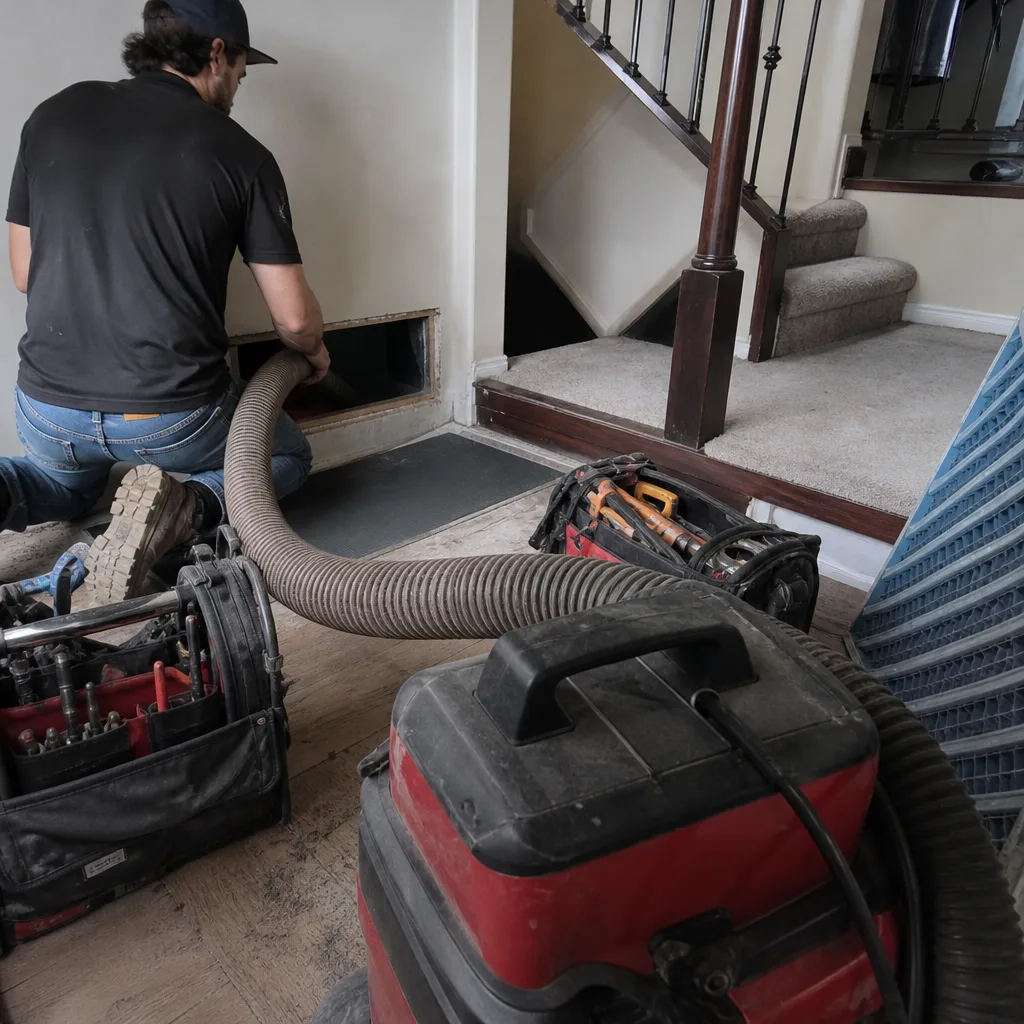 Before
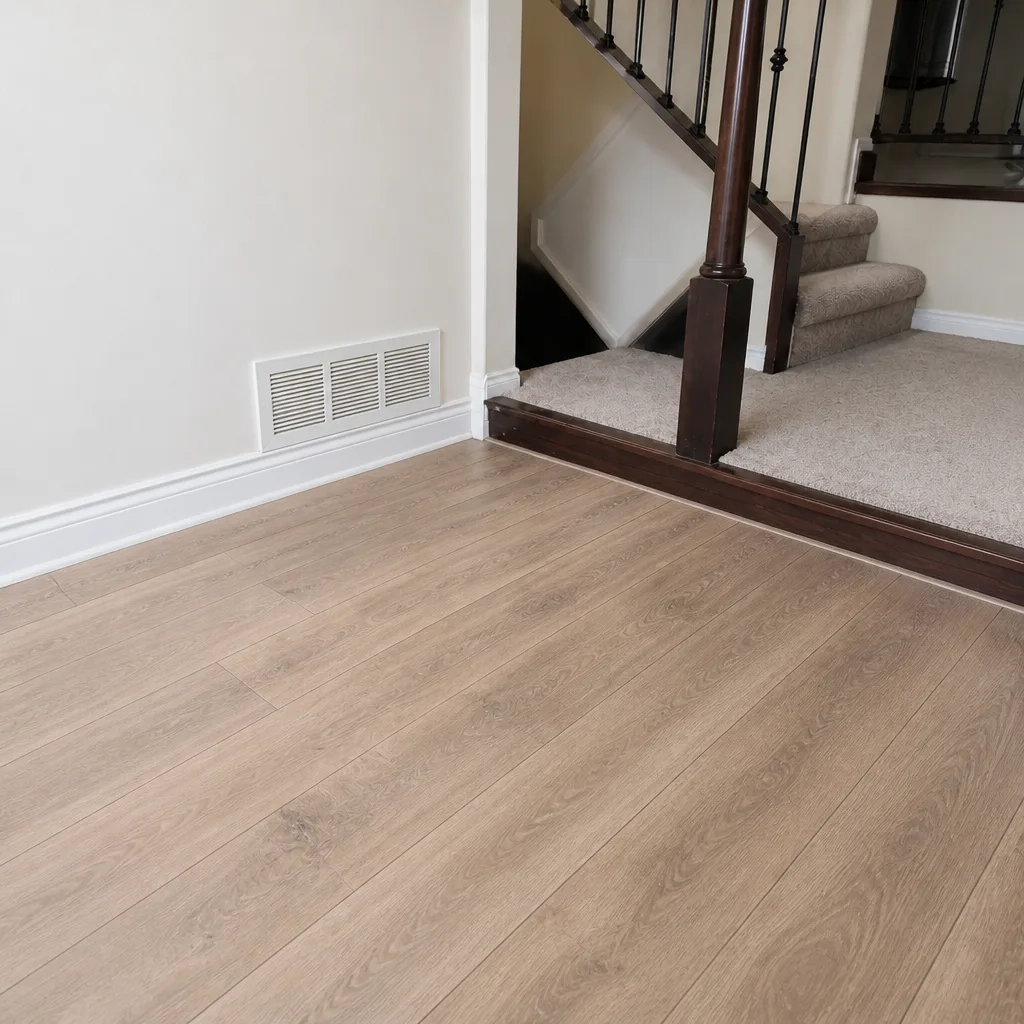 After
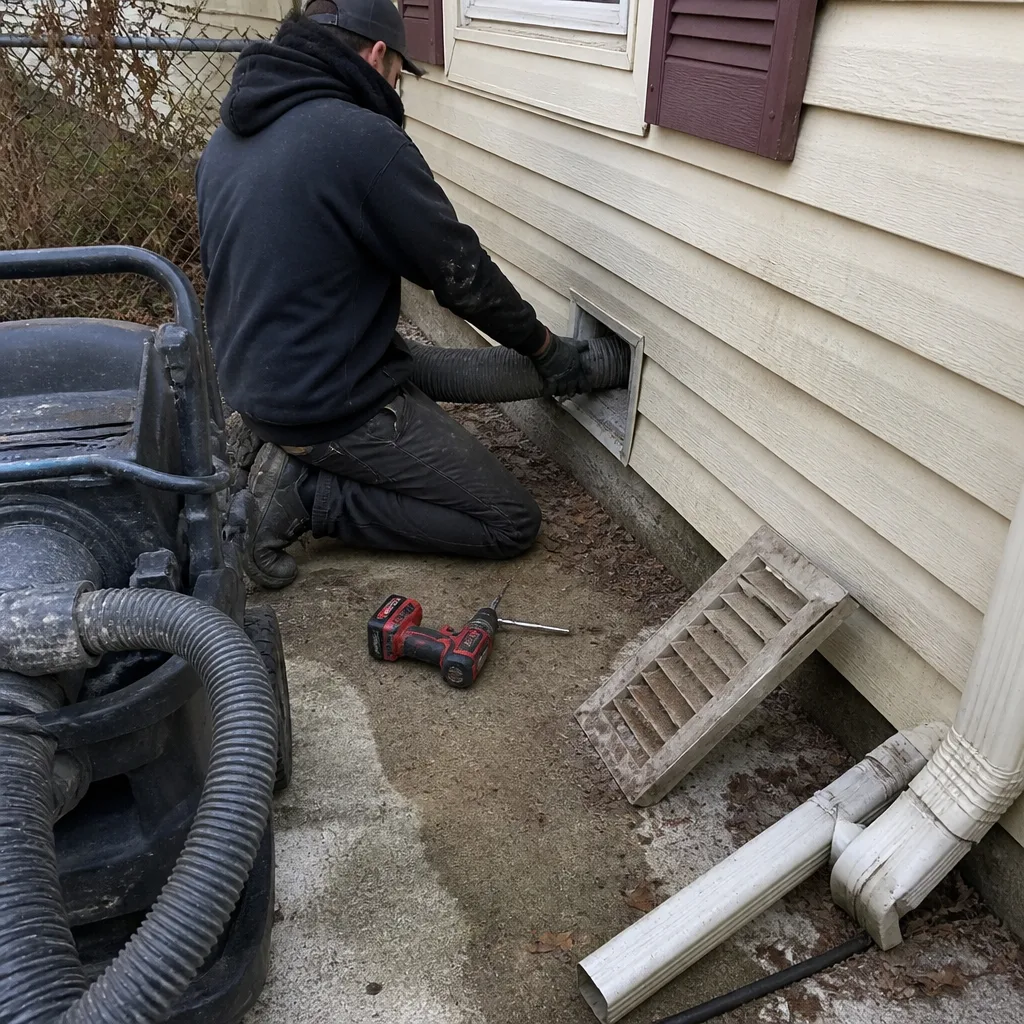 Before
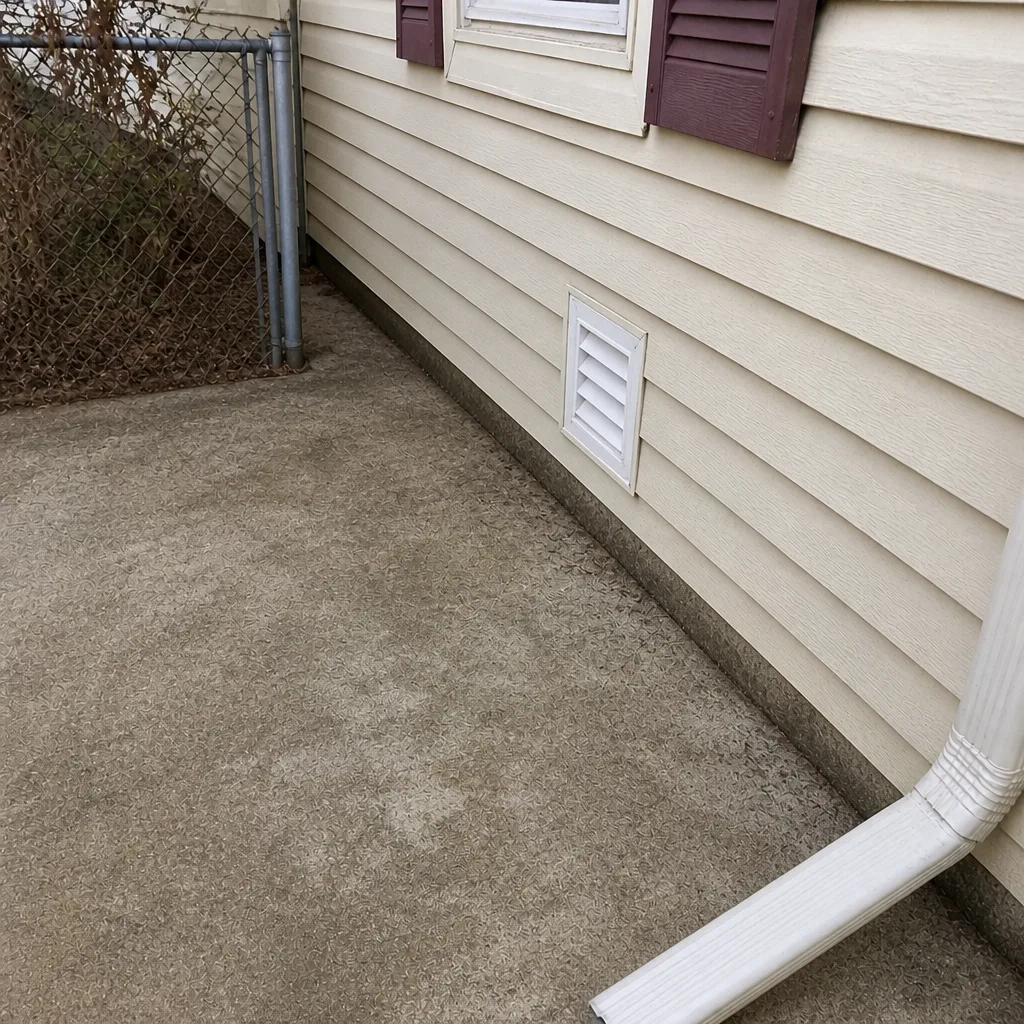 After
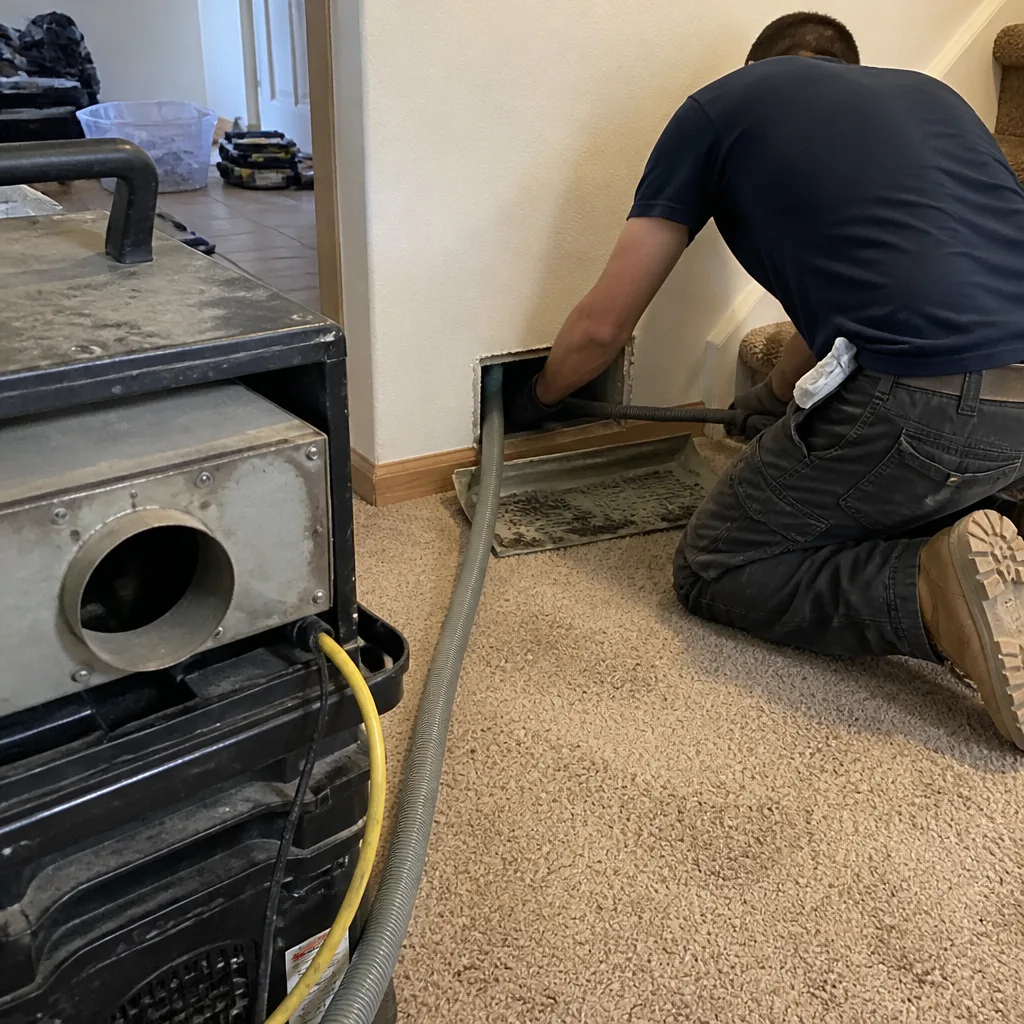 Before
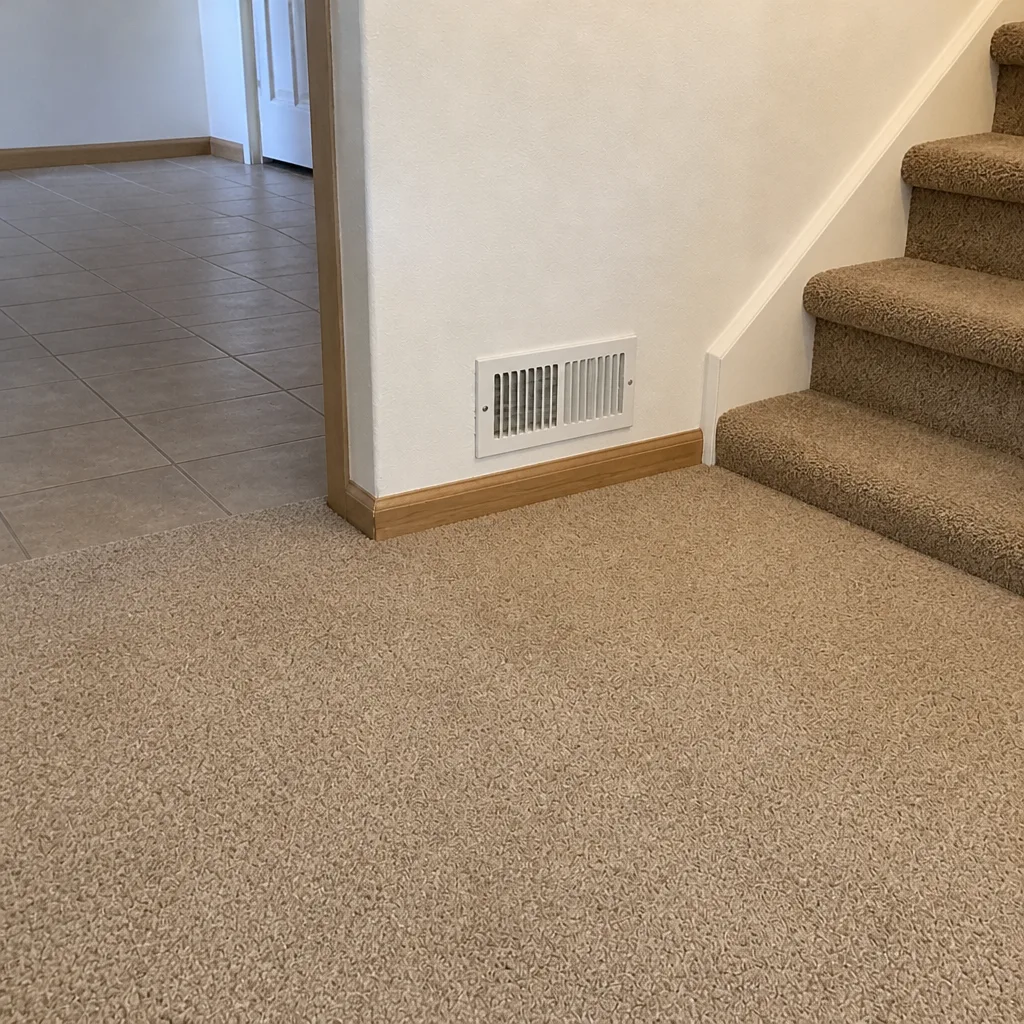 After
When to Call a Professional
If you’ve done the seasonal checks and your return grills show a visible grey film within one season of a cleaning, the system is loading faster than your filter strategy can keep up. That’s a cleaning + filter assessment conversation, not a DIY situation. If the first cooling run of spring brings a dusty smell or visible dust kick-up at the registers, book before the cooling system does full-volume passes. If the fall inspection shows a caked blower wheel or heat exchanger concerns, get a qualified technician out. If you see loose duct joints, crushed flex, or a sagging trunk line in the basement or attic, duct repair should be part of the plan. And if the dryer vent path is unclear or runs a long distance, get it cleaned as a fire-safety measure. Ridgeway Air Duct Cleaning offers free estimates in Westminster; call (844) 643-7197. We answer 24/7. Fast dispatch from 7am to 7pm, Sunday through Friday.
Frequently Asked Questions
Most Westminster homes do well with one full cleaning per year, ideally in late winter before the cooling season, with a second light pass in late September if the summer brought heavy wildfire smoke or the spring brought heavy pollen. That’s a two-cleaning cadence in a heavy year and one cleaning in a lighter year. The right cadence depends on your filter setup, pet load, occupant sensitivities, and whether the ducts are older flex or newer rigid metal. Call (844) 643-7197 for an exact quote; estimates are free.
Some of it reaches the duct lining, even with a good filter. Wildfire smoke’s fine particle fraction is what makes it past standard filters, and once those particles deposit on the duct walls they stay there for months. A media filter cabinet (Honeywell or Aprilaire) catches more of it than a 1-inch filter, but no filter catches everything, which is why a cleaning before the smoke season gives the system its best starting point. Call (844) 643-7197 for a duct assessment before the next smoke wave.
Westminster’s dry winter air creates static charge on dust particles, and charged particles adhere to duct walls much harder than they would in humidity. Every system cycle lifts a fraction of that charged dust layer back into the living space, which is why the “always dusty in winter” pattern shows up in a lot of dry-climate homes. A whole-house humidifier reduces the static charge, and a proper media filter helps catch what’s circulating. The underlying duct load still needs to be addressed with a cleaning. Call (844) 643-7197 for an exact quote.
Air-only cleaning uses high-velocity air to blow dust off duct surfaces, but it doesn’t physically agitate statically bonded debris from the duct wall. Contact cleaning uses the Rotobrush system to run an agitating brush through the duct, break the debris coat from the lining, and extract it under HEPA vacuum. In dry Westminster air that static adhesion is significant, so contact cleaning matters more than it would in a humid climate. Call (844) 643-7197 to talk through which approach fits your system.
No, a shop vac doesn’t create the containment that keeps fine debris from recirculating into your home during cleaning, and it won’t reach the duct surfaces a brush-based system can. Worse, without proper negative-air control, the cleaning can actually worsen the problem by lifting dust into the living space. Duct cleaning requires the right equipment class, which is why Nikro HEPA vacuums and Abatement Technologies negative-air equipment are standard on serious jobs. Call (844) 643-7197 for a free estimate.
It’s usually handled on the same visit if both are due. Dryer vent cleaning and duct cleaning address different systems, but they’re both part of the same preventive maintenance cycle and the same technician can handle both. If your dryer vent hasn’t been cleaned in over a year, or the vent run is long, adding it to the duct cleaning visit is the practical choice. Call (844) 643-7197; estimates are free.
The Bottom Line
Air duct cleaning in Westminster works best when it’s built around the city’s four seasonal stress events, not around a coupon or an annual calendar reminder. The highest-value cleaning window is late winter before the first cooling run, followed by a second pass in late September before the house seals up for winter. Filter strategy should shift with the season too, and a media cabinet filter from Honeywell or Aprilaire is a better long-term choice than a 1-inch panel filter. The mechanical side (heat exchanger, blower wheel, duct connections) is a fall inspection item every year. Align cleaning with the season and you reduce how often you need it.
Our technicians have up to 8 years of experience, we use Rotobrush contact cleaning and Nikro HEPA equipment on every job, and we work with Abatement Technologies negative-air containment on serious IAQ projects. We can estimate your job and give you a flat price per system, agreed before work starts. Call (844) 643-7197 for a free estimate. We answer 24/7. Fast dispatch from 7am to 7pm, Sunday through Friday.
Written by the team at Ridgeway Air Duct Cleaning.